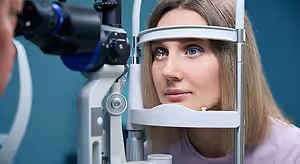
If you have not had an eye exam recently, you may wonder what the appointment will involve. Will you simply read an eye chart, or will there be other tests?
A comprehensive eye exam evaluates both your vision and the health of your eyes. At Line Optical Conroe, the process is designed to be thorough, comfortable, and tailored to your age, health history, symptoms, and everyday visual needs.
Your Eye Exam, Step by Step
Here is what to expect at an eye exam with an optometrist in Conroe.
Step 1: Discussing Your Vision and Health History
Your visit begins with a conversation. The eye doctor will ask about changes in your vision, headaches, eye strain, dryness, glare, medications, health conditions, and family history of eye disease.
This information helps identify risk factors and guides which tests should be included during your appointment. Be sure to mention concerns even if they seem minor or only happen occasionally.
Step 2: Checking Your Eyesight and Prescription
Vision testing measures how clearly you can see at different distances. Automated refraction and wavefront technology may be used to gather detailed information about your eyes and provide a starting point for your prescription.
The doctor will then refine the results by asking which lens choices appear clearer. This determines whether you have nearsightedness, farsightedness, astigmatism, or presbyopia and whether your current prescription should be updated.
If you wear contacts, a separate contact lens exam may also be needed to assess lens fit, comfort, and eye health.
Step 3: Evaluating the Health of Your Eyes
A comprehensive exam looks beyond your prescription. The doctor evaluates the external and internal structures of your eyes and may measure eye pressure or test your peripheral vision.
Depending on your needs, eye health screening technology may include digital retinal imaging, which photographs the retina, or optical coherence tomography (OCT), which creates detailed cross-sectional images. These tests can help identify or monitor concerns such as glaucoma, cataracts, macular degeneration, and diabetic eye disease. Patients who need continued monitoring can also learn about eye disease management.
Step 4: Reviewing Your Results
After testing, your eye doctor will explain the findings and answer your questions. Recommendations may include updated glasses, contact lenses, preventive care, further testing, or follow-up visits.
This discussion is an important part of comprehensive eye care in Conroe, TX. You should leave understanding both how well you see and how healthy your eyes appear.
What Should You Bring to Your Appointment?
Bring your insurance card, photo ID, current glasses, contact lenses or lens packaging, and an up-to-date list of medications. If possible, also bring information about previous eye conditions, surgeries, and your family’s eye health history.
Comprehensive Eye Exam FAQs
What’s included in a comprehensive eye exam?
Your visit generally includes a medical and vision history review, visual acuity testing, prescription testing, an external and internal eye health evaluation, and personalized recommendations. Digital retinal imaging, OCT, visual field testing, or eye-pressure measurements may be performed when appropriate.
How is an eye exam different from a quick vision screening?
A screening usually checks whether you can see clearly at a particular distance. It may flag a possible vision problem, but it does not provide a complete prescription or thoroughly evaluate eye health. A screening is not a substitute for an examination by an eye doctor in Conroe, TX.
How often should I get a comprehensive eye exam?
Children age five and older generally benefit from annual exams. Adults ages 18–64 may be seen every one to two years, while adults 65 and older are commonly examined annually. Your doctor may recommend more frequent care if you wear corrective lenses or have diabetes, high blood pressure, symptoms, or a family history of eye disease.
What should I bring to my appointment?
Bring your insurance card, current glasses, contact lenses or packaging, and a medication list. Previous eye-care records can also be helpful, especially if you are establishing care with a new optometrist.
Will I need my eyes dilated?
Not everyone requires dilation at every visit. The doctor may recommend a dilated eye exam based on your age, symptoms, health history, risk factors, or the need for a wider retinal view. Your near vision may be blurry and your eyes may be sensitive to light for several hours afterward, so bring sunglasses and ask whether you should arrange transportation.
Schedule Your Comprehensive Eye Exam
An annual eye exam in Conroe can provide clearer answers about your prescription and eye health. If you are due for a checkup or have noticed a change in your vision, request an appointment with Line Optical Conroe today.